What if you could own a digital fraction of a valuable physical commodity without having to store, transport, or manage the asset yourself?
Dubai is turning that concept into reality.
On September 7, 2026, Dubai launched the tokenization of a 1,971-kilogram silver bar, recognized by Guinness World Records as the world’s largest silver bar. Qualified investors can obtain fractional digital interests linked to the physical asset, creating a notable example of how RWA tokenization is moving from concept toward practical implementation.
But the significance extends far beyond one silver bar. For businesses, the development highlights the growing potential of RWA tokenization development, where blockchain infrastructure is used to represent, manage, and potentially transfer interests in physical and traditional financial assets.
Dubai’s Silver Bar Becomes a Digital Asset
Dubai’s Silver Bar Becomes a Digital Asset
The silver bar is made from 99.9% pure silver and was manufactured in the UAE by SAM Precious Metals. Its 1,971-kilogram weight represents 1971, the year the UAE was founded.
The physical silver remains securely stored rather than being divided into smaller pieces. Instead, its ownership or economic interest is represented digitally through blockchain-based infrastructure.
The process involves several layers. The physical silver is registered and verified through DMCC Tradeflow, held in secure custody by Brink’s, while Tokinvest handles the digital issuance under Dubai’s regulatory framework. The tokenized asset is issued as an Asset-Referenced Virtual Asset and deployed on BNB Chain.
Physical asset → verification → custody → tokenization → fractional digital access
This model captures the fundamental idea behind RWA tokenization: connecting a real-world asset with a digital representation while maintaining the underlying physical asset and the infrastructure needed to support ownership and transactions.
What Is RWA Tokenization Development?
What Is RWA Tokenization Development?
RWA tokenization development involves building blockchain-based infrastructure that connects real-world assets with digital ownership, investment, settlement, and transaction systems.
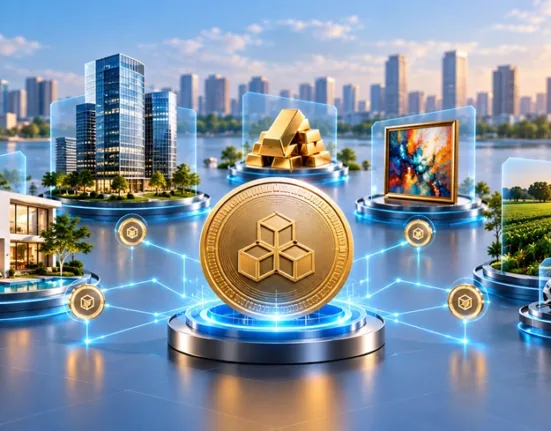
The asset itself does not necessarily become digital. Instead, its ownership rights, economic interests, or legally defined claims can be represented through blockchain-based tokens. Rather than creating another cryptocurrency platform, businesses can use RWA tokenization to bring existing assets onto digital financial infrastructure.
Potential assets include:
- Real estate
- Precious metals
- Commodities
- Private credit
- Securities
- Collectibles
- Other eligible real-world assets
The exact token structure depends on the asset, legal framework, jurisdiction, and rights associated with the digital representation.
RWA Tokenization Development Is More Than Creating a Token
RWA Tokenization Development Is More Than Creating a Token
One of the biggest misconceptions about RWA tokenization is that the process simply involves creating an ERC-20 token or another blockchain asset. The token is only one component. A production-ready RWA tokenization platform may require:
- Smart contracts
- Asset verification
- Custody integrations
- Investor management
- Compliance systems
- Wallet infrastructure
- APIs
- Reporting tools
- Transaction monitoring
- Transfer controls
- Secondary-market functionality
The connection between the token and the underlying asset is particularly important. If one token represents an interest in physical silver, investors need confidence that the corresponding silver exists, is properly held, and is legally connected to the digital representation. This creates demand for technology that can bridge on-chain records with off-chain assets.
Why Dubai’s Silver Tokenization Matters for RWA Development
Why Dubai’s Silver Tokenization Matters for RWA Development
The Dubai silver initiative demonstrates an important principle: smart contracts alone are not enough for successful RWA tokenization. A company developing an RWA platform needs to consider the complete asset lifecycle. For example, consider a tokenized gold platform. The development process could involve:
- Asset onboarding: Verify the underlying gold and establish its ownership and authenticity.
- Custody: Determine where the physical gold will be stored and how custody will be managed.
- Legal structure: Define exactly what rights token holders possess.
- Token issuance: Create blockchain-based representations of those rights.
- Investor access: Provide onboarding, wallets, dashboards, and transaction functionality.
- Compliance: Apply appropriate customer verification, AML requirements, investor restrictions, and jurisdiction-specific rules.
- Asset monitoring: Maintain confidence that the underlying asset continues to exist and remains properly managed.
This is why RWA tokenization development is becoming a multidisciplinary technology challenge rather than simply a blockchain coding exercise.
Turning RWA Tokenization into a Scalable Business Opportunity
Turning RWA Tokenization into a Scalable Business Opportunity
The Dubai silver initiative also raises a practical question for businesses: where does the commercial opportunity in RWA development actually come from?
Tokenizing an asset is only the starting point. The larger opportunity lies in building an ecosystem around the tokenized asset. For example, an RWA development company could create platforms that allow asset owners to tokenize eligible properties, commodities, precious metals, private credit, or other assets.
Investors could then access these assets through a digital platform, while businesses manage ownership records, compliance, transactions, and asset-related data from a centralized dashboard. This creates several potential B2B models, including:
- RWA-as-a-Service platforms
- White-label tokenization infrastructure
- Asset-specific marketplaces
- Institutional tokenization solutions
- Blockchain-powered asset-management platforms
Dubai’s tokenized silver bar demonstrates this principle on a high-profile scale. The next opportunity may be helping businesses apply similar infrastructure to assets and markets where fractional ownership, digital settlement, and programmable ownership can deliver measurable value.
What Businesses Should Consider Before Building an RWA Tokenization Platform
Building an RWA tokenization platform requires more than developing smart contracts. Businesses need to determine how the physical asset, legal structure, blockchain infrastructure, and investor experience will work together.
Choose the Right Asset
Not every asset is equally suitable for tokenization. Businesses should consider factors such as market demand, ownership structure, value, liquidity, verification requirements, and the complexity of managing the underlying asset. Different platform architectures may be needed for commodities, private finance, real estate, and precious metals.
Define What the Token Represents
A token must have clearly defined rights. It could represent fractional ownership, an economic interest, or a legally defined claim. This decision directly influences smart-contract design, compliance requirements, transfer rules, and investor protection.
Establish Asset Verification and Custody
The connection between the digital token and the physical asset must be credible. Businesses should determine:
- How the underlying asset will be verified
- Who will hold the asset
- How ownership will be recorded
- How asset status will be monitored
- How changes to the asset will be reflected in the platform
Consider Regulations and Target Markets
Jurisdiction can significantly influence RWA tokenization development. Licensing, KYC/AML requirements, investor eligibility, transfer restrictions, reporting obligations, and other regulatory considerations should be addressed during platform planning rather than after development is complete.
Plan for Trading and Scalability
Token issuance is only the beginning. Businesses should consider how eligible users will access, transfer, or trade tokenized assets and whether the platform can support additional assets, users, integrations, and transaction volumes as it grows.
Ultimately, successful RWA tokenization development requires a clear strategy covering the asset, token rights, custody, compliance, investor experience, liquidity, and scalability before the technology is built.
The Role of Smart Contracts in RWA
The Role of Smart Contracts in RWA Tokenization Platforms
Smart contracts become particularly valuable when asset-related processes need automation. Depending on the legal and technical structure, smart contracts can help manage:
- Token issuance
- Transfers
- Ownership records
- Transaction rules
- Distributions
- Access restrictions
- Other programmed conditions
However, smart contracts cannot independently determine whether a physical asset exists. That requires trusted external infrastructure. This is where oracles, custodians, asset registries, auditors, legal entities, and verification systems can become important components of an RWA tokenization architecture. The strongest RWA platforms therefore combine blockchain automation with reliable real-world verification.
RWA: The Next Layer of Blockchain Infrastructure
RWA Tokenization: The Next Layer of Blockchain Infrastructure
The Dubai silver initiative highlights how blockchain technology is expanding beyond cryptocurrencies into real-world assets. Different participants can play a role in this emerging ecosystem:
- Fintech companies can develop tokenized investment platforms.
- Investment platforms can provide digital access to traditionally difficult-to-access assets.
- Asset managers can explore blockchain-based ownership and distribution.
- Blockchain developers can build RWA infrastructure and smart-contract solutions.
- Exchanges and marketplaces can support eligible tokenized-asset trading.
- Custodians and technology providers can connect physical assets with digital ownership.
As adoption grows, RWA projects could create new infrastructure for tokenized commodities, real estate, securities, private credit, and other real-world assets.
Final Thoughts
Final Thoughts
Dubai’s tokenized silver bar is significant because the physical asset itself is not the revolutionary part. The more important development is the infrastructure surrounding it.
A massive physical commodity can remain securely stored while its interests are represented digitally, distributed fractionally, and connected to blockchain-based financial infrastructure. That is the promise of RWA tokenization.
For businesses, the opportunity goes one step further: developing the technology, compliance framework, asset-management infrastructure, and marketplaces that make tokenized real-world assets practical at scale. Dubai’s silver bar may be a single asset today. But it demonstrates a much larger possibility — a future where physical assets can interact with digital markets through purpose-built RWA tokenization platforms.