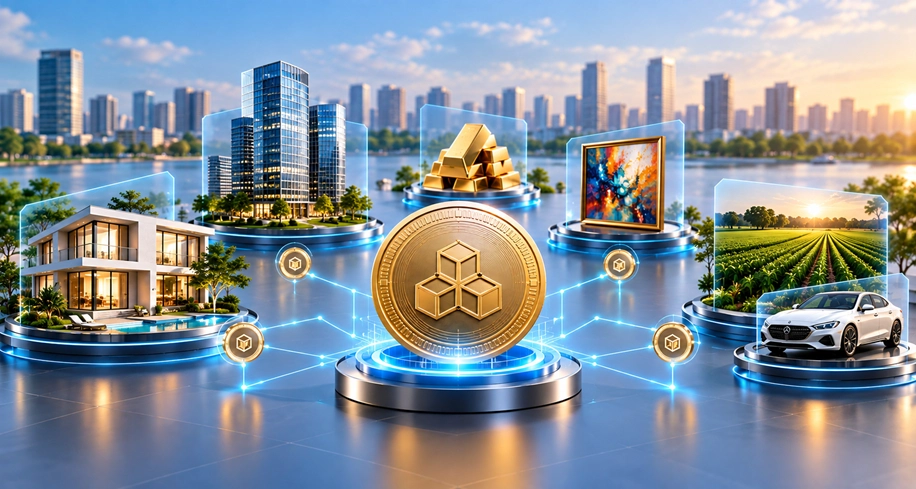
For years, assets such as property, commodities, bonds, and private-market investments have been valuable but difficult to divide, transfer, or access efficiently. RWA tokenization is changing that equation by creating a digital layer around these assets and bringing them into blockchain-enabled markets.
The concept goes beyond simply creating a token. A token can be designed to represent a specific ownership interest, income entitlement, debt claim, or other legally defined right connected to an underlying asset. This creates new ways to structure how assets are issued, managed, transferred, and settled.
What is particularly interesting in 2026 is the shift from experimentation to real-world implementation. Financial institutions, asset managers, and businesses are exploring tokenized securities, funds, commodities, credit, and real estate as part of a broader move toward more connected financial infrastructure.
For businesses, this opens up a practical question: How can an existing asset are structured for a digital market without losing the legal, operational, and regulatory framework that supports it? That is where RWA tokenization development becomes valuable—not as a replacement for traditional finance, but as a new digital layer that can make asset management and transactions more flexible.
What is RWA Tokenization?
What Is Real-World Asset Tokenization?
Real-world asset (RWA) tokenization is the practice of reflecting ownership, rights, or financial interests in tangible or conventional financial assets into digital tokens on a blockchain. These assets can include real estate, bonds, commodities, private credit, investment funds, and other off-chain assets.
Rather than simply putting a physical asset on the blockchain network, tokenization generates a digital representation that connects the asset to defined legal and economic rights. Depending on the structure, token holders may receive ownership interests, income rights, or claims linked to the underlying asset.
RWA tokenization brings traditional assets into blockchain-based infrastructure, enabling features such as fractional ownership, programmable transactions, transparent recordkeeping, and potentially faster settlement. However, its effectiveness depends on more than blockchain technology. Legal structure, asset custody, valuation, investor verification, regulatory compliance, and reliable data are equally important to creating a trustworthy tokenized asset ecosystem.
Advantages of Tokenized RWA
Why RWA Tokenization Is Gaining Momentum in 2026
Real-world asset (RWA) tokenization is gaining attraction in 2026 as businesses look for simpler, faster, and more efficient ways to manage and transfer traditional assets. One of the biggest reasons for this growth is the emerging connection between conventional finance and virtual assets.
Institutions are now moving beyond small blockchain experiments and exploring real-world use cases such as cardless securities, investment funds, and faster settlement systems. At the same time, digital fiat and other digital payment methods are making it easier to buy, sell, and settle tokenized assets digitally.
But RWA tokenization in 2026 is about much more than simply putting assets on the blockchain. Regulations, legal ownership, custody, confirming the underlying assets, integrating various blockchain networks, investor eligibility, and generating sufficient liquidity for asset trading are other issues that businesses must consider.
As a result, RWA tokenization is becoming an integral part of how the financial system itself is evolving, rather than just being another blockchain use case.
Dubai Tokenizes the World’s Largest Silver Bar
Dubai’s latest initiative shows how physical commodities are moving into regulated digital markets through fractional ownership and blockchain-based infrastructure.
Explore the Story →How RWA Tokenization Works?
Types of Real-World Assets That Can Be Tokenized
RWA tokenization can be applied to a wide range of physical and traditional financial assets provided the fundamental holdings, claims, custody, and regulatory requirements can be clearly established. At KIR Chain Labs, we help businesses bring a wide variety of real-world assets to the blockchain.
Real Estate:
Residential properties, commercial buildings, rental assets, and real estate funds can be tokenized for fragmented ownership and digital management.
Bonds & Fixed-Income Assets:
Government and corporate bonds can be represented as tokens to simplify issuance, transfers, and settlement.
Commodities:
Gold, silver, agricultural products, and other commodities can be linked to digital tokens representing defined interests in the underlying assets.
Investment Funds:
Mutual funds, ETFs, private funds, and other investment vehicles can use tokenization to digitize fund interests and streamline transactions.
Collectibles & High-Value Assets:
Art, luxury goods, precious metals, and other valuable assets can be tokenized when ownership and authenticity can be verified.
Other Financial Assets:
Equities, structured products, intellectual property, and selected alternative assets can also be tokenized depending on legal and regulatory requirements.
Ready to Tokenize Your Real-World Assets?
Build a secure and scalable RWA tokenization platform tailored to your asset, business model, and regulatory requirements.
Discuss Your RWA Project →RWA Tokenization Platform Development Process: A step-by-step guide
Developing an RWA tokenization platform involves several important steps, from identifying the asset to building smart contracts and integrating compliance solutions. Each stage plays a key role in creating a secure, compliant, and user-friendly platform. Let’s have a look at our step by step development process.
Identify the Asset and Define the Business Model
Identify the asset, target users, ownership structure, revenue model, and purpose of tokenization.
Set Up the Legal and Regulatory Framework
Determine the applicable jurisdiction, legal rights, KYC/AML requirements, investor eligibility, and regulatory obligations.
Create the Tokenization Structure
Define what each token represents, including ownership, revenue rights, debt claims, token supply, transfer rules, and redemption conditions.
Authenticate and Validate the Underlying Asset
Set up processes for asset valuation, ownership verification, documentation, custody, and ongoing proof of the underlying asset.
Select the Blockchain and Build Smart Contracts
Select the appropriate blockchain infrastructure and develop smart contracts for token issuance, transfers, compliance controls, distributions, and redemption.
Develop the RWA Tokenization Platform
Develop essential components such as asset listings, investor onboarding, token management, wallets, portfolio dashboards, transaction history, and reporting.
Integrate Compliance, Custody, and Data Services
Connect KYC/AML providers, custody solutions, oracles, valuation sources, payment systems, and other required third-party infrastructure.
Test, Audit, Deploy, and Monitor the Platform
Perform smart contract audits, security testing, functional testing, and compliance reviews before deployment, followed by continuous monitoring and platform management.
RWA Development by KIR Chain Labs
Benefits of Our Real-World Asset Tokenization Platform
Tokenizing real-world assets can make asset management and investment more flexible, transparent, and efficient. Our platform brings these benefits together by using blockchain technology to simplify how assets are tokenized, managed, and accessed. Here are some of the key benefits our platform offers.
- Improved Asset Liquidity
- Greater Transparency
- Enhanced Security
- Built-In Compliance
- Fractional Ownership
- Automated Transactions
- Flexible and Scalable Solution
- Better Investor Experience
With these features, our RWA tokenization platform helps businesses simplify asset tokenization while creating a more transparent, secure, and accessible digital asset ecosystem.
RWA Tokenization Development Services by KIR Chain Labs
At KIR Chain Labs, we develop custom RWA tokenization platforms that connect real-world assets with blockchain-based infrastructure. Our approach focuses on the complete tokenization lifecycle – from asset representation and smart contracts to compliance, custody, and digital asset management.
1. RWA Token Development
We create customized tokens that represent your holdings, economic interests, or defined rights linked to real-world assets.
2. White-Label RWA Platform Development
We build ready-to-customize RWA platforms that businesses can launch under their own brand and business model.
3. Smart Contract Engineering and Auditing
We develop and audit smart contracts for token issuance, transfers, compliance rules, distributions, and redemption.
4. Compliance and Legal Framework Integration
We integrate KYC/AML, investor eligibility, transfer restrictions, and other compliance requirements into the platform architecture.
5. Custody and Asset Management Integration
We connect custody and asset management solutions to maintain reliable control, verification, and management of tokenized assets.
6. RWA Marketplace Development
We develop marketplaces where eligible users can discover, access, manage, and trade tokenized assets within applicable regulations.
7. Post-Launch Maintenance and Liquidity Support
We provide ongoing technical maintenance, upgrades, monitoring, and support for platform operations and liquidity-related integrations.
Build Your RWA Tokenization Platform
From token development and smart contracts to compliance and RWA marketplaces, get a solution built around your business requirements.
Building Secure and High-Performance RWA Tokenization Platforms
KIR Chain Labs is dedicated to providing state-of-the-art technology solutions for real-world asset (RWA) tokenization. Our platform leverages a robust tech stack, ensuring that businesses can tokenize assets with the highest standards of security, performance, and scalability.
Key Components of Our Technology Stack
Key Components of Our Technology Stack:
How RWA Tokenization is Changing Key Industries
Global Property Tokenization
Tokenize properties and allow investors to buy fractions of premium assets globally. Reduce barriers and expand reach to smaller investors.
Tokenization and Commodities
Convert physical gold/sliver and other commodities into blockchain-based tokens to enhance liquidity and transparency in trading.
Automated Asset Issuance
Simplify issuance, interest payouts, and secondary market trading of fixed-income assets through automated smart contracts.
Infrastructure Financing
Tokenize renewable energy plants or public infrastructure projects to attract investors through fractionalized ownership and yield-based models.
Art, Music & Collectibles
Create digital twins of artworks or music royalties, ensuring artists retain value while fans invest in intellectual property ownership.
ESG & Green Investments
Tokenize carbon credits or sustainability-linked assets, making environmental investments traceable and accessible.
Why Choose KIR Chain Labs?
Why Choose KIR Chain Labs for RWA Tokenization Development
As a leading blockchain development company, KIR Chain Labs specializes in RWA tokenization asset development, offering secure, compliant, and scalable platforms that bring real-world assets onto the blockchain. We guide businesses through every stage of the RWA tokenization process from asset-backed token creation and smart contract engineering to investor onboarding, KYC/AML verification, and secondary market integration.
With over a decade of experience in blockchain technology and decentralized finance (DeFi), we develop enterprise-grade tokenization ecosystems on established blockchain networks like Ethereum, Polygon, BNB Chain, and Avalanche. Our solutions are designed for transparency, automation, and interoperability, ensuring seamless cross-chain functionality and high-performance operations.
At KIR Chain Labs, we design configurable KYC/AML, eligibility, transfer-control, and jurisdiction-specific workflows based on your project’s requirements. By partnering with us, you gain access to a trusted, forward-thinking blockchain development company dedicated to transforming real-world asset tokenization into a secure, high-performance digital infrastructure that fosters global liquidity and accessibility.
Conclusion
Conclusion
Real-world asset tokenization is becoming a practical way to represent traditional assets in a digital format. By using blockchain technology, tokenization can provide clearer ownership records, simplify asset management, and support more efficient transactions. Its potential, however, depends on factors such as the type of asset, legal structure, regulatory requirements, and the technology used.
At KIR Chain Labs, we focus on understanding these different requirements when developing RWA tokenization solutions. This includes areas such as token design, smart contracts, asset management, investor onboarding, compliance features, and platform infrastructure.
As the RWA ecosystem continues to develop, businesses can explore tokenization based on their specific assets, objectives, and regulatory environment. A well-planned approach can help create a practical connection between traditional assets and digital financial infrastructure.
Frequently Asked Questions
How can investors buy and trade tokenized real-world assets?
Investors can buy tokenized assets using supported payment or wallet options and trade them through compliant secondary marketplaces, where available.
How do you build a real world asset tokenization platform?
KIR Chain Labs builds customized RWA tokenization platforms with blockchain, smart contracts, compliance, wallets, asset management, trading, and transaction tracking tailored to business needs.
How long does it take to develop a real world asset tokenization platform?
Development time depends on the platform’s features, asset type, blockchain, integrations, and compliance requirements. A basic platform may take less time, while a feature-rich solution requires a longer development cycle.
What smart contract standards are used for RWA tokenization?
Common standards include token standards such as ERC-20 and ERC-721, along with other blockchain-specific standards. The appropriate standard depends on the asset type, ownership model, and functionality required.
How does fractional ownership work with tokenized assets?
Fractional ownership divides an asset into multiple digital tokens, allowing ownership to be represented in smaller portions. This can make certain high-value assets more accessible while enabling ownership records to be managed on blockchain networks.
Which blockchain is best for real world asset tokenization?
There is no single blockchain that is best for every RWA project. The choice depends on factors such as transaction costs, scalability, security, ecosystem support, interoperability, and project requirements.